


December 2, 2025
Don’t Let Your Christmas Lights Overload Your Electrical System
The holiday season brings warmth, joy and plenty of festive lighting. While those bright Christmas lights can make your home feel magical, they also place an extra strain on your electrical system. Overloaded circuits are one of the most common causes of holiday electrical issues, leading to tripped breakers, damaged wiring and possibly fires. Fortunately, a few simple precautions can help you decorate and celebrate safely.
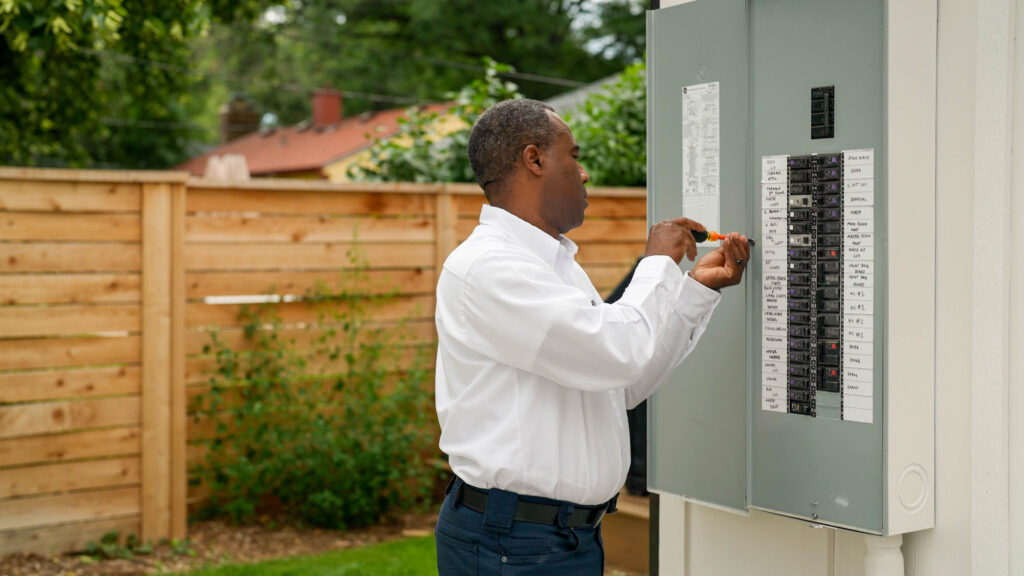
Applewood Plumbing Heating & Electric recommends you first understand your electrical limitations. Every household circuit can only handle a certain amount of voltage. When too many lights, inflatable decorations and appliances operate on the same circuit, you risk overloading it. If you notice your lights flickering or your breaker tripping, that means you are pushing the limits. Spread your décor among different circuits to reduce risk of electrical overload and fires.
If you are still using incandescent holiday lights, upgrading to LED strands can dramatically decrease your risk of overloaded electrical circuits. For example, a 100-count string of incandescent lights uses 40 watts, but LEDs use about 4.8 watts. LEDs are energy efficient, longer lasting and cost less to run over time.
If you are planning to decorate like the Griswolds, plug outdoor lights or decorations directly into an outlet whenever possible. Don’t plug lights into power strips that are plugged into extension cords that are plugged into outlets. Multiple cords can overload a plugs and result in sparks, arcing and potential fires.
The reality is, unless you pull a Griswold, you’re probably not in danger of circuit overload from holiday lights. Most residential circuits can carry 15 to 20 amps, which means you would have to plug in at least 90 strands of LED lights into a single circuit before you reach the breaking point.
To ensure your home’s safety, an inspection of your breaker box can identify potential issues. Applewood recommends certified electricians assess your electrical capacity.